Across Europe, the invoices businesses send each other are changing. Instead of a PDF attached to an email, more and more countries require an e-invoice: a file a computer can read directly, sent through an approved network. Some of these rules are already in force. Others start in the next few years, and from 2030 they reach invoices between EU countries too.
If you buy from or sell to businesses in Europe, this guide explains what an e-invoice is, which countries require them and when, and what to do now.
What counts as an e-invoice
The European Commission defines it like this:
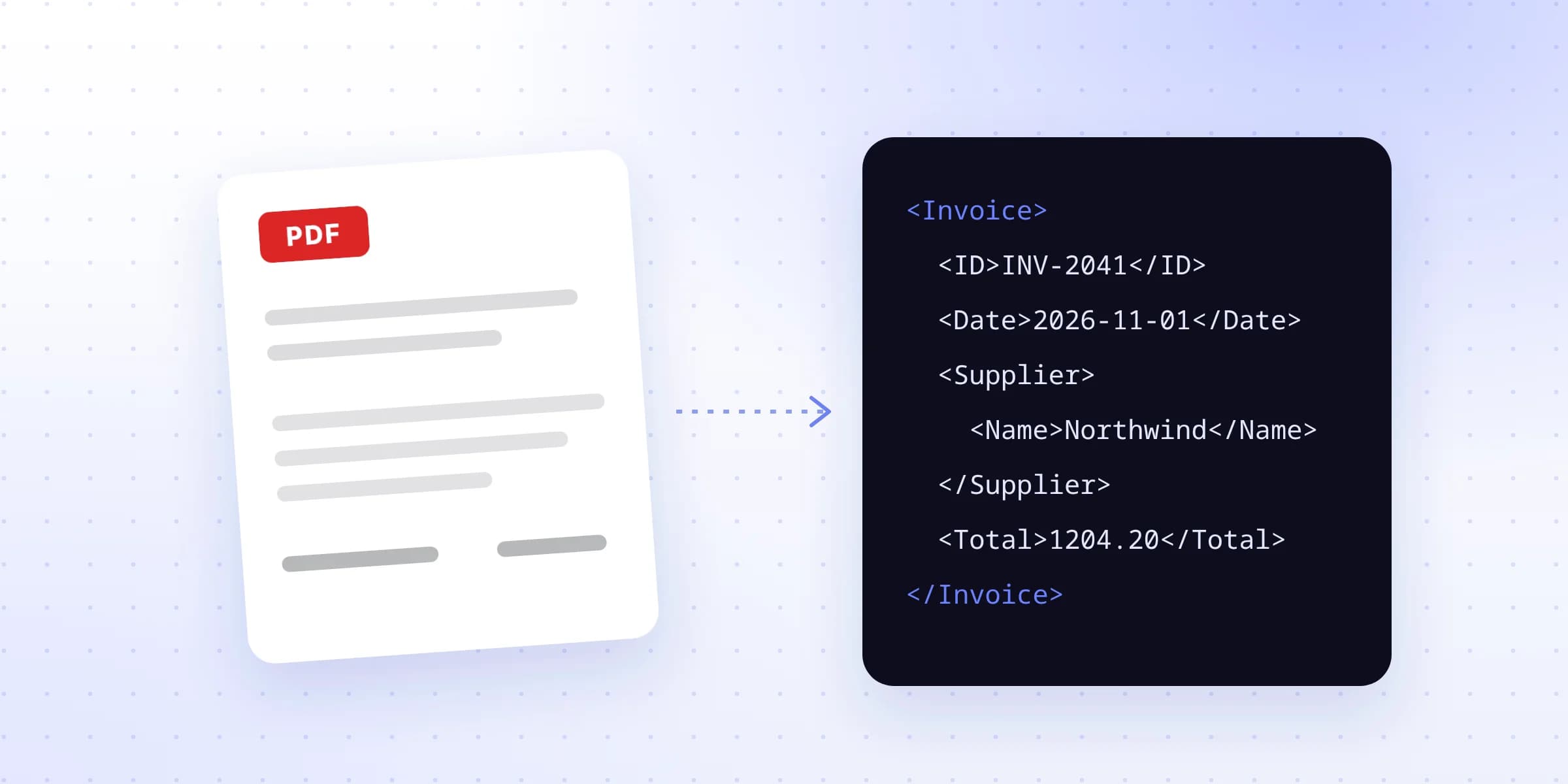
The key word is structured. A PDF or a Word file isn't an e-invoice, even when it's sent by email. It's a picture of an invoice that a person, or software, has to read. An e-invoice is the data itself: the supplier, the amounts and the VAT, each in a labeled field, usually as an XML file following the European standard, EN 16931.
That's why the rules exist. When the data arrives already labeled, nobody has to type it in, and tax offices can see sales as they happen instead of months later.
Which countries, and when
The EU's rules, called VAT in the Digital Age, came into force in April 2025. They let each country require e-invoices between its own businesses without asking the EU first, and many have. The dates below are from each country's tax office or finance ministry, as of November 2026.
When e-invoices become required
Each dot is a deadline. Choose a country to see what each one means.
EU-wide
14 April 2025In force
The EU's VAT in the Digital Age rules came into force. Each country may now require e-invoices between its own businesses.
1 July 2030Coming up
E-invoices become required for sales between businesses in different EU countries, with the details reported to tax offices.
Two patterns stand out. Most countries make businesses receive e-invoices first and send them later, and most start with large businesses and give smaller ones another year. Dates also move: Greece and Latvia have both pushed theirs back.
What it means for a small business
It depends on where you are and who you trade with:
- If your country has a rule, your accounting or invoicing software will usually handle the format for you. The main job is making sure your software supports your country's system before your deadline, and that you can receive e-invoices, which is often required first.
- If you buy from suppliers in those countries, you may start receiving e-invoices from them, sometimes alongside a PDF copy.
- If your country has no rule yet, nothing changes for invoices between local businesses until it does, but sales to businesses in other EU countries will be covered from July 2030.
The UK, outside the EU, is following: VAT invoices between UK businesses must be e-invoices from April 2029. The US has no requirement, so businesses there will keep receiving a mix of PDFs, paper and, from European suppliers, e-invoices.
What to do now
- Check whether your country has a deadline, and whether it applies to you by size.
- Ask your accounting or invoicing software provider how and when they'll support it.
- Make sure you can receive e-invoices first: in most countries that comes before sending.
- Keep a note of which suppliers send which kind of invoice, so nothing is missed during the switch.
- Don't assume a PDF from a supplier in a country with a rule is the official invoice. The e-invoice is.
Where Invoist fits
E-invoices already carry their data, so they don't need reading. The PDFs and photos that will keep arriving alongside them do. Invoist reads those and turns them into the same clean data, the supplier, dates, amounts and VAT, so every invoice can be checked and recorded the same way. See what Invoist reads.